

Michael
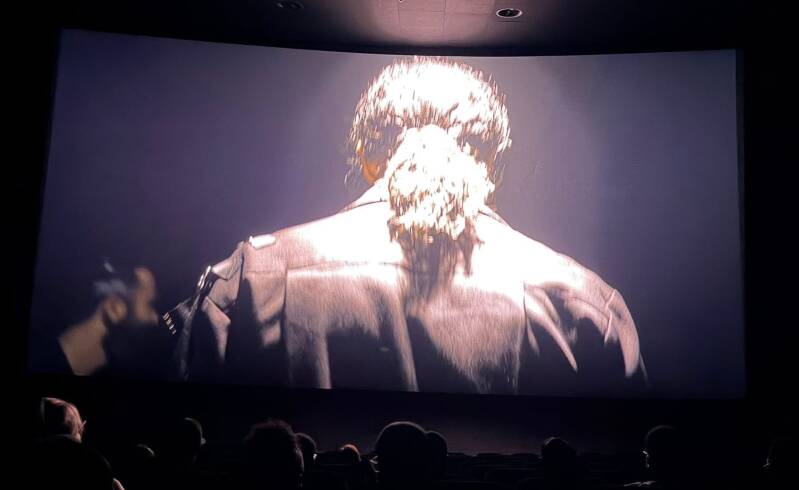

Sometimes two people walk out of the same cinema... and leave feeling as though they watched two completely different films.
Where others may have seen a pop star, I saw a little boy.
A child who was forced to grow up far too quickly. A child who endured physical abuse. A child who lived in fear of the very person who was supposed to make him feel safe.
Perhaps that's because I no longer look only at people's behaviour. I look at what lies beneath it.
I look through the lens of trauma.
What moved me most was how visible the effects of that trauma still were.
Physical violence—especially when experienced as a small, defenceless child—repeatedly pushes the body into a freeze response. Your development quite literally comes to a halt. Being hit, especially by a parent, may be one of the most devastating things that can happen to a child. It doesn't only damage a child's sense of safety; it also violates their sense of ownership over their own body.
The very person who should protect you becomes the person you fear.
That loss of basic safety often stays with you for years.
You can see this in the film when Michael, now an adult, stands face to face with his father. To me, it felt as though his body wasn't responding like that of a global superstar, but like the little boy who had once been trapped with nowhere to go.
That is exactly why trauma doesn't live only in our minds—it lives in our bodies as well. Without trauma processing and body-oriented therapy, we often keep slipping back into those old survival responses. Situations that are perfectly safe can still feel dangerous, even when the threat disappeared long ago.
The film also shows how deeply words can wound. The nickname "Big Nose," given to him by his father, may sound like a passing remark, but shame doesn't work that way. We all know where that eventually led. Shame settles deep within the human soul. One message, repeated often enough, can become an inner voice that follows you for the rest of your life.
You're not good enough.
You're too much.
You're not enough.
There is something wrong with you.
How many people carry a voice like that inside them?
The film reminded me once again of how profoundly childhood trauma can shape a person's life. Not only the way we feel, but also our relationships, our boundaries, our identity, and our longing to recover what we lost as children.
That is why, for me, this blog isn't really about Michael Jackson at all. He represents something much bigger. Every child who grows up without genuine safety. Every adult who still believes something is fundamentally wrong with them, when in reality their nervous system is simply doing what it once had to do in order to survive.
And yet, the film also showed me something else.
That despite everything we've lived through, we are still capable of creating beauty.
Of making music. Of loving. Of touching other people's hearts. Of offering something to the world that is greater than our pain.
Perhaps that is what moved me most.
Not the trauma, but the life force.
To me, Michael symbolises something I keep seeing—not only in him, but in many of the people I've met along the way. Sometimes, deep wounds eventually become a source of creativity, beauty and love. Not because suffering makes people extraordinary, but because some people find the courage to reconnect with something greater than their pain.
With Source. With Life. With their soul.
To me, his story shows just how high a person can rise when, despite everything they have endured, they find the courage to reconnect with that Source and ultimately choose themselves.
Perhaps that is the greatest victory over trauma.
Not that the past disappears, but that it no longer prevents you from bringing your unique light into the world.
❤️
Reflection
When you look back on your childhood... what words or beliefs are you still carrying that were never truly yours?