

Zeytin Ağacı and the Echo of a War
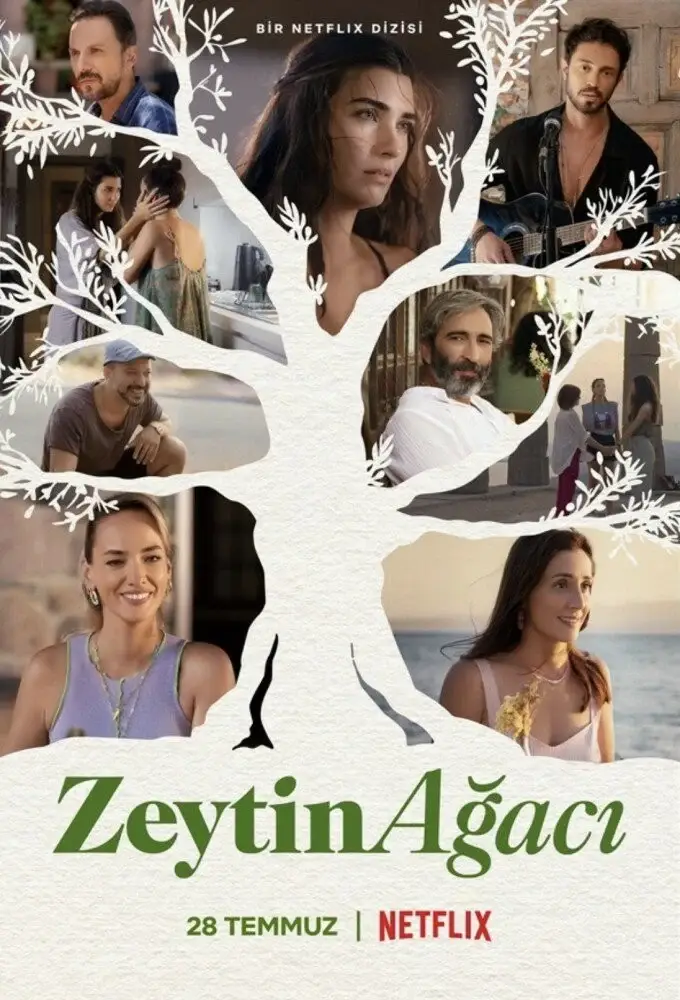
One of my favourite series on Netflix is Zeytin Ağacı (The Other Self).
The story follows three inseparable friends who travel to a small coastal town in Turkey after one of them is diagnosed with cancer. There, they are introduced to spiritual healing and family constellations, forcing them to confront unresolved trauma within their family history.
This series has given me new insights into my own life and relationship dynamics more than once. Over the years, I have participated in dozens of family constellations and experienced things that I simply cannot explain with my rational mind. For me, there is no longer any doubt that something is passed down through families that goes beyond stories or DNA alone.
Within spiritual psychology and biology, there are two different ways of looking at the idea that we are connected to the seven generations before us—both through our DNA and, according to some perspectives, energetically. Seven generations represent no fewer than 254 ancestors who all contributed to your existence.
DNA: You inherit 50% of your DNA from your parents, 25% from your grandparents, and ultimately around 0.78% from one specific ancestor in the seventh generation.
Epigenetics: Research suggests that major life events such as war, trauma and famine can influence how genes are expressed. Some of these changes may even be passed on to future generations. Alongside this biological perspective, systemic psychology offers another approach.
In family constellations, developed by Bert Hellinger, practitioners work with what is often called the family field or the knowing field.
The Family System: This perspective sees a family as a living energetic system. When someone within the previous seven generations was excluded, died at a young age, experienced war, or carried a significant family secret, the system can become imbalanced.
Unconscious Loyalty: A child or grandchild born generations later may unconsciously carry the pain, guilt or grief of that ancestor in an attempt to restore balance within the family.
In Zeytin Ağacı, we see the characters gradually discover whose pain they have been carrying. Through the constellation process, they symbolically return that burden to where it belongs, allowing them to live more freely themselves.
Perhaps you're thinking: "That happened in Turkey. Of course there have been wars and forced migrations there." But what about the Netherlands?
During the First World War, thousands of Dutch soldiers were mobilised along the country's borders for months. Then came the Second World War, leaving deep scars in almost every family. If we consider the idea that the experiences of seven generations continue to echo through a family system, what about events that happened only two generations ago?
Many of our parents—or, if you're younger, your grandparents—belong to what is often called the second generation of war survivors. And precisely because so little was spoken about the war, its impact often continues to echo through parents, children, aunts, uncles, cousins... and perhaps through you as well.
During one of my family constellation weekends, I was asked to represent the mother of a woman who knew very little about her family history and wasn't particularly interested in exploring it. As I stood there, absentmindedly looking at a mural on the wall, I suddenly heard her tell the facilitator: "My mother is from Waalwijk, and my father worked for Philips." What a coincidence, I thought. My mother is from Waalwijk too!
As the constellation unfolded, it became clear that the tension between this woman, her sister and her daughter was connected to the fact that the victims of the Second World War had never truly been acknowledged within the family system. During the war, Philips had played a controversial role through its involvement with a workshop connected to Camp Vught. The moment those forgotten victims were finally acknowledged, something shifted. The daughter visibly relaxed. Eventually, the mother—the role I was representing—found the courage to move towards her daughter. Perhaps there was something she, too, was being invited to face, no matter how frightening it felt.
After the constellation, the facilitator shared something that stayed with me. This story... this echo of the war... was also present within the family systems of every single representative in the room.
There was a reason each of us had been chosen.
That evening, I fell asleep exhausted.
The next morning, I woke up with a sudden realisation: I had actually been standing there for my own mother.
That afternoon, I became curious about my grandfather's history. I discovered things about the war that had never been spoken about at home. That research brought me closer to my family's story.
But above all...
it brought me closer to my mother.
That evening, I couldn't simply go to bed.
I lit a candle.
I thought about everyone who had lost their lives during the war.
My grandparents.
My mother.
And everything that may have remained unspoken.
I thanked them for the life they had passed on to me.
I honoured their fate.
And, symbolically, I returned what had never been mine to carry.
For the first time, I truly understood that love doesn't always mean carrying someone else's pain. Sometimes, love means respectfully giving that pain back to the person to whom it belongs. Because my task is to live my own life.
What I know now is this...
The more compassion I have for my ancestors, the more compassion I have for myself. Perhaps that is where healing begins. Not by changing the past, but by acknowledging that it happened.
❤️
Reflection
How much of what you're carrying... truly belongs to you?